
This is a thought-provoking and entertaining overview of the evolution of criminality over the centuries. The book emphasises how crime has had to become more organised so as it can survive and thrive, in a Darwinian system of adaptation.
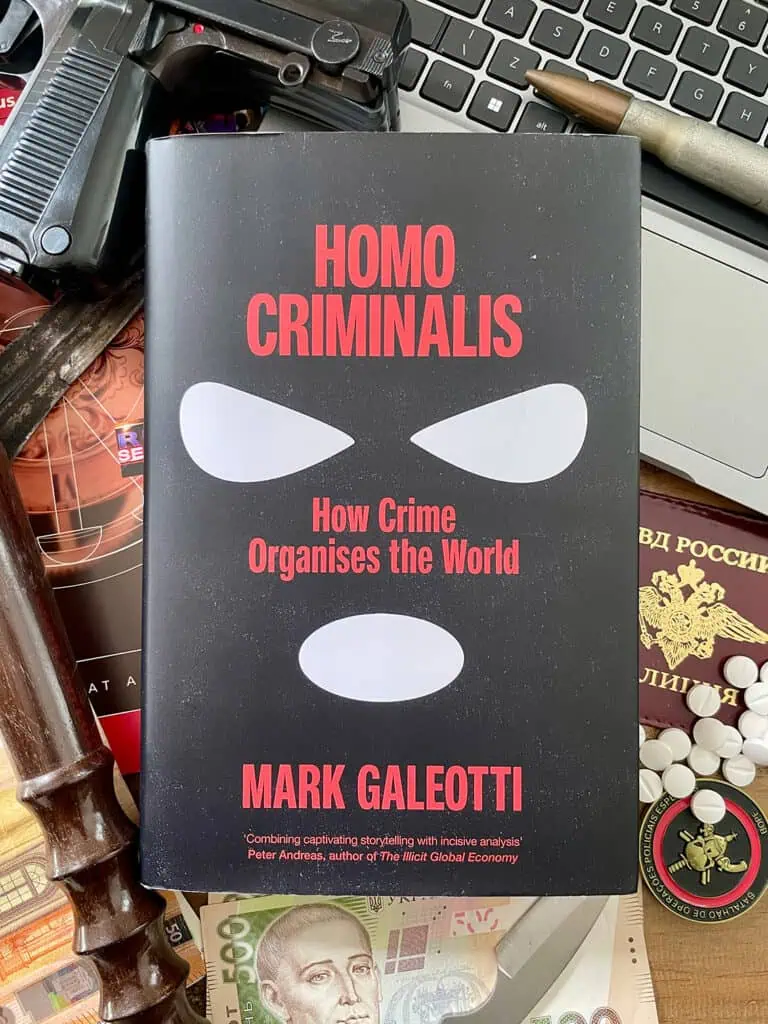
Mark Galeotti is a historian, analyst and academic who specialises in writing about transnational crime as well as Russian security affairs. His engaging writing style canvasses essential truths such as the interdependence between the criminal underworld and society’s upperworld, the role of the state in setting conditions for organised criminality, and the economic imperatives that drive criminal activities.
The book is divided into four parts; the age of state-building, the age of capitalism, the age of globalisation and the brave new world. Each is filled with fast-paced accounts of themes and developments, interlaced with nuggets of interesting facts relating to criminality in areas as diverse as illicit drug crime, people smuggling and human trafficking, counterfeiting and environmental crime.
The book is for readers who want to develop their understanding of the role of organised criminality in society and those who may want to develop broad strategies or ideas on how it can be countered or disrupted.
PODCAST INTERVIEW
Click HERE to listen to episode 52 of the APJ podcast – an interview of the book’s author Mark Galeotti, as well as his thoughts on how Russia’s illegal invasion of Ukraine will impact Russian organised crime groups.

