
EDITORIAL
Most APJ readers will no doubt have had the experience of responding to vehicle crashes to render aid and investigate the cause of the collision. For these types of crashes, the investigative processes used by police are usually straightforward; they involve collecting and evaluating evidence against the requirements of well-used legislation. But what about collisions that occur at sea? And what about collisions at sea that result in the charges being laid for legislation previously untested by the courts?
In this case study, police found themselves involved in a unique investigation hundreds of kilometres from home. Further, investigators were closely scrutinised in real-time by the country’s most senior politicians, the media, partner agencies, and another nation’s government. It was a case of police involvement in something much bigger than a routine crash investigation.
NOTIFICATION AND REFERRAL
About 1.45pm on Monday 5 April 2010 the Australian Federal Police (AFP) Operations Coordination Centre in Canberra received a telephone call from the compliance manager of the Great Barrier Reef Marine Park Authority (GBRMPA). AFP assistance was sought in a serious incident off the coast of Queensland, about 70km east of Great Keppel Island and 95km northeast of Gladstone.
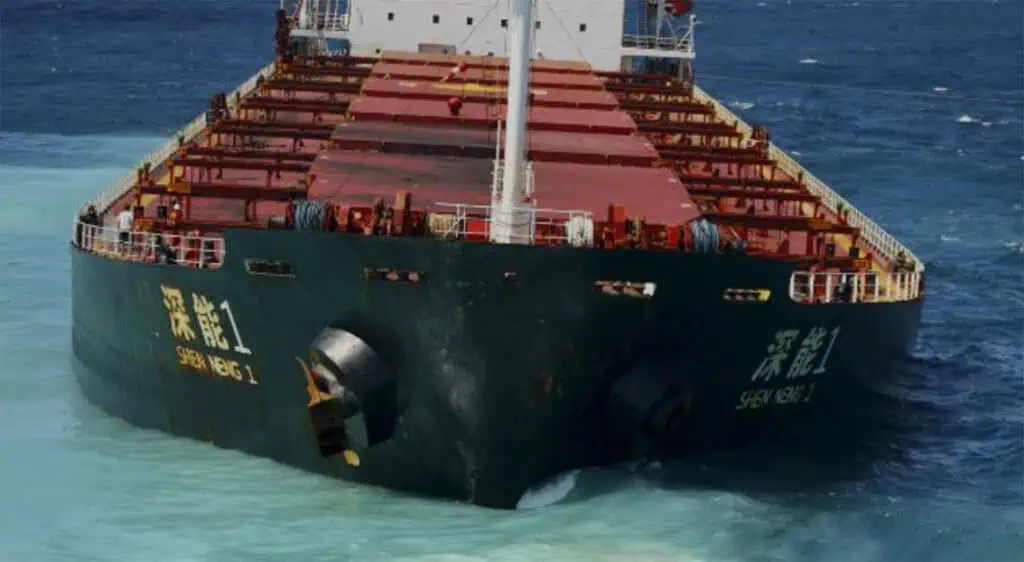
A Chinese registered bulk coal carrier called Shen Neng 1 had run aground, and it was feared extensive damage had been caused to the Great Barrier Reef. An emergency salvage operation was underway, but there was a risk the Shen Neng 1 could break up and cause catastrophic damage.
As the lead management and regulation agency for the Great Barrier Reef Marine Park, GBRMPA sought the assistance of the AFP to investigate the matter.
Although it was a public holiday—Easter Monday—GBRMPA’s request (formally called an ‘agency-assist referral’) was promptly raised through the AFP chain of command, up to the Deputy Commissioner level. The referral was accepted and allocated to the nearest AFP office (Brisbane) for actioning. Two on-call federal agents1 were notified, and they immediately made plans to drive to Gladstone, 540km away.
LOCATION AND JURISDICTION
Stretching for more than 2300 kilometres along the waters adjacent to Queensland’s eastern coast, the Great Barrier Reef is widely considered to be one of the world’s natural wonders, containing around 3000 individual coral reefs and shoals and almost 1000 islands.
In 1975 the Commonwealth designated most of the reef as a marine park. The Great Barrier Reef Marine Park Act 1975 (GBRMP Act) was enacted by the federal parliament for the good management and protection of the reef and surrounding areas. The legislation allowed for the establishment of GBRMPA as an agency, created criminal and civil offences relating to the park, and established regulatory, search and associated powers for designated inspectors.
While GRBMPA employs inspectors to undertake routine compliance inquiries, it calls upon the AFP to assist in major investigations. AFP members are classified as inspectors on an ex-officio basis in the GBRMP Act. Significantly for this investigation, some of the Act’s offences were amended in November 2009. The changes enabled prison terms for serious environmental offences and substantial multi-million dollar fines for corporate offenders.
The Shen Neng 1 incident proved to be the first opportunity to test the amendments in court. Potential breaches of the Commonwealth Protection of the Sea (Prevention of Pollution from Ships) Act 1983 (POTS Act) and the Navigation Act 1912 would be considered in the early stages of the investigation. However, the charges ultimately laid were from the GBRMP Act.
ARRIVAL IN GLADSTONE
On Tuesday 6 April 2010 Federal Agents Ray Holder and David Payne arrived at Gladstone. There, they met representatives from the other agencies involved in different aspects of the incident. These agencies and their focus of interest at that point in time were:
- GBRMPA – identifying the damage to the reef.
- Australian Maritime Safety Authority (AMSA) – securing the vessel, its cargo and sailors.
- Maritime Safety Queensland (MSQ) – identifying and countering the impact of pollution in the general area.
- Queensland Department of Environment – identifying the potential impact of pollution should it reach landfall; and
- Queensland Police Service – supporting MSQ as required and prepared to investigate breaches of Queensland law.
Commonwealth agencies who were not present, but those that would come to play notable roles were the Commonwealth Director of Public Prosecutions (CDPP), the Department of Foreign Affairs and Trade (DFAT), and the Department of Immigration and Citizenship (DIAC).2 The Australian Transport Safety Bureau (ATSB) would also conduct an independent safety investigation into the grounding, but this did not impact the criminal investigation.
THE BASIC FACTS
By the time of the AFP’s arrival in Gladstone, the basics of the incident had been established.
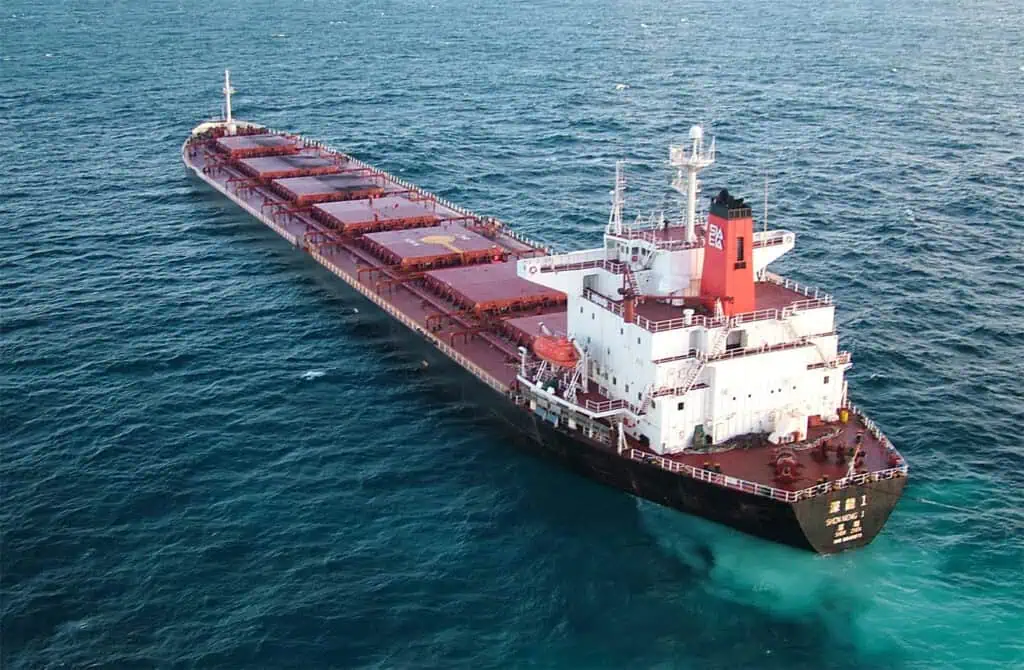
The Shen Neng 1 was a Japanese-built, Chinese-owned bulk carrier, 225m long, 32.3m wide and with a depth of 18.3m.3
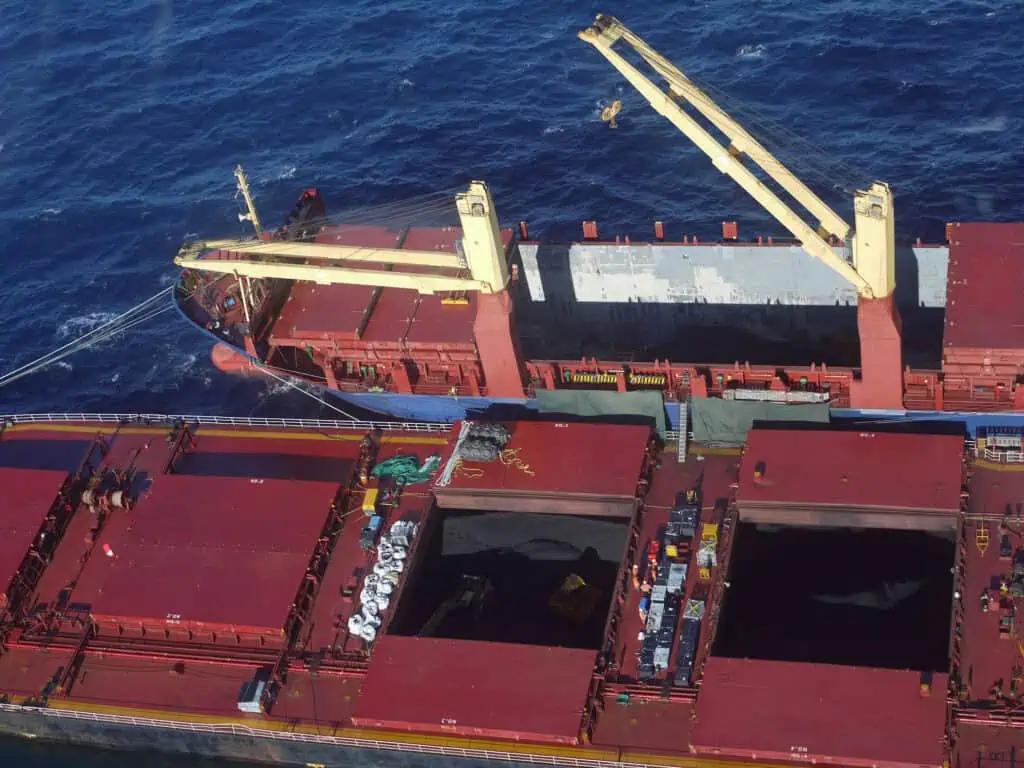
About 11am on Saturday 3 April 2010, after filling up with 68,000 tonnes of coal and carrying almost 1000 tonnes of fuel oil, the vessel sailed from Gladstone with an intended destination of Bayuquan, China. An Australian pilot assisted the ship’s crew navigate the vessel out of port.
Before the pilot disembarked around 1pm, he confirmed with the captain that a safe route through the reef had been plotted. The vessel would sail north and then turn east into the Coral Sea along a well-used shipping channel.
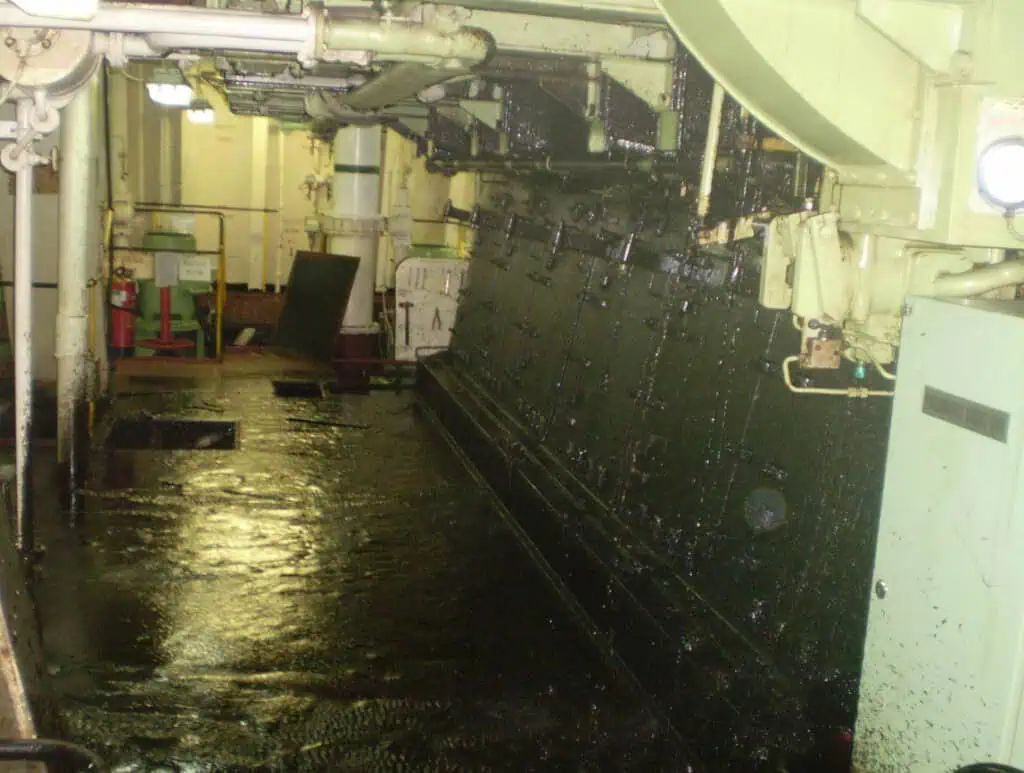
About 6.25pm the Sheng Neng 1 notified AMSA that it had run aground on Douglas Shoal outside of the channel. This notification sparked an emergency response. AMSA personnel (including a surveyor) arrived at the Shen Neng 1 just after midnight and found the ship’s hull seriously damaged. The ship’s propeller shaft was bent, and six fuel oil and water ballast tanks had been breached, with oil and water flooding the engine room.
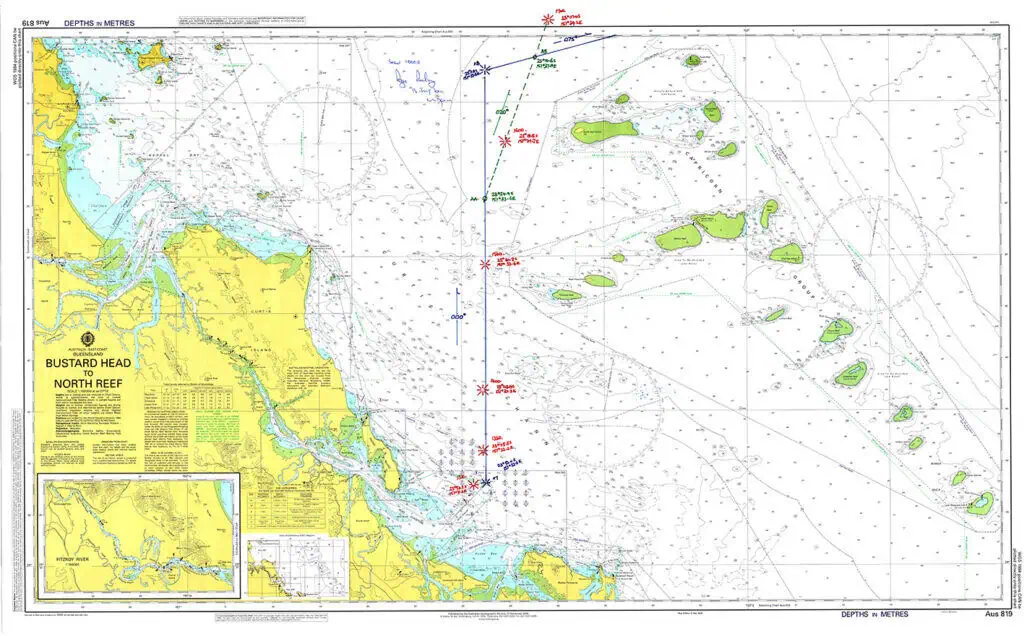
A cursory look at the vessel’s charts by AMSA suggested the original planned route had been recalculated slightly during the voyage, and the ship had failed to turn to the east at the designated waypoint.
It instead continued to sail north for about 12 kilometres before striking the shoal, which is inside a ‘no go’ zone to commercial shipping because of its shallow depth (nine metres). At the time of the grounding, the vessel’s 44-year-old chief officer, Xuegang Wang, was on the bridge as the designated ‘officer of the watch’. The ship’s captain, 47-year-old Jichang Wang, had been in his cabin attending to paperwork.
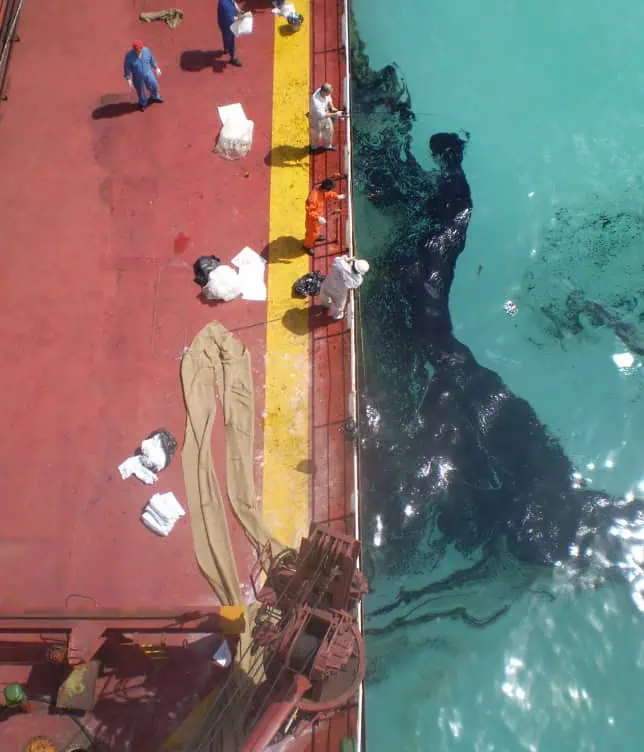
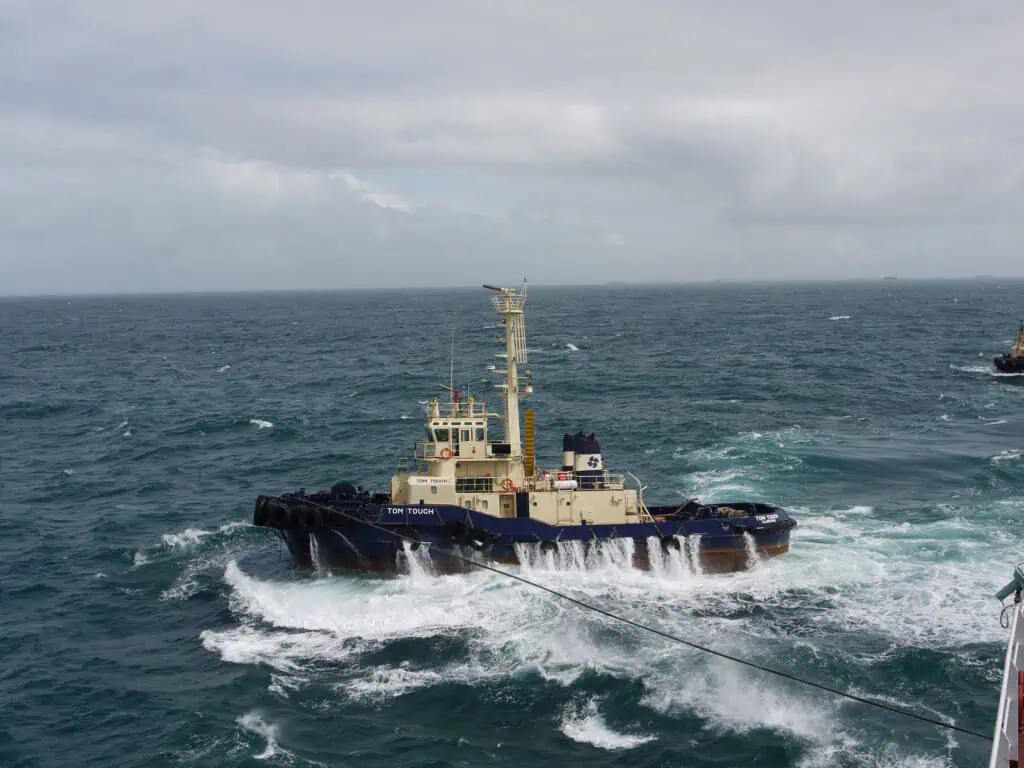
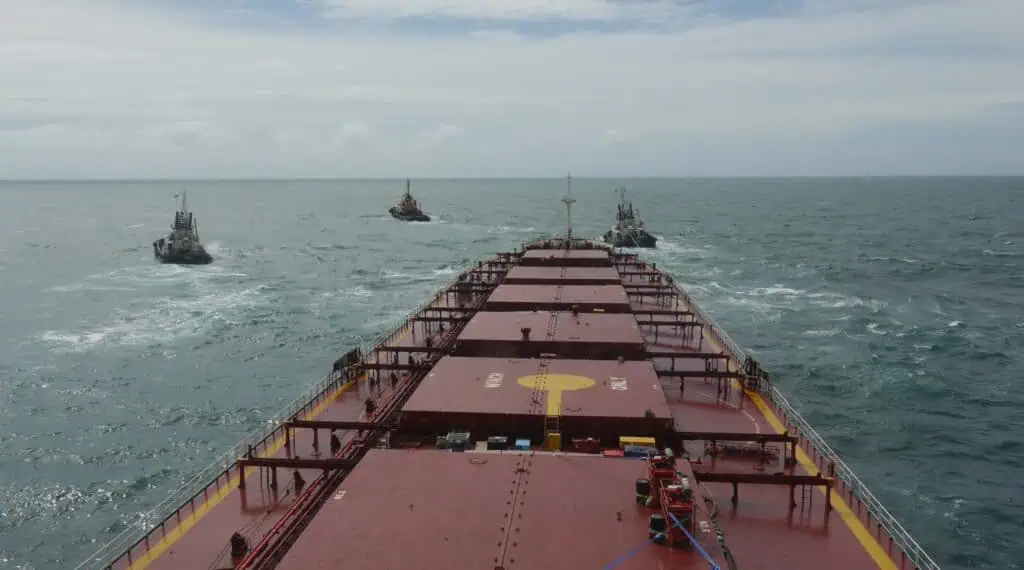
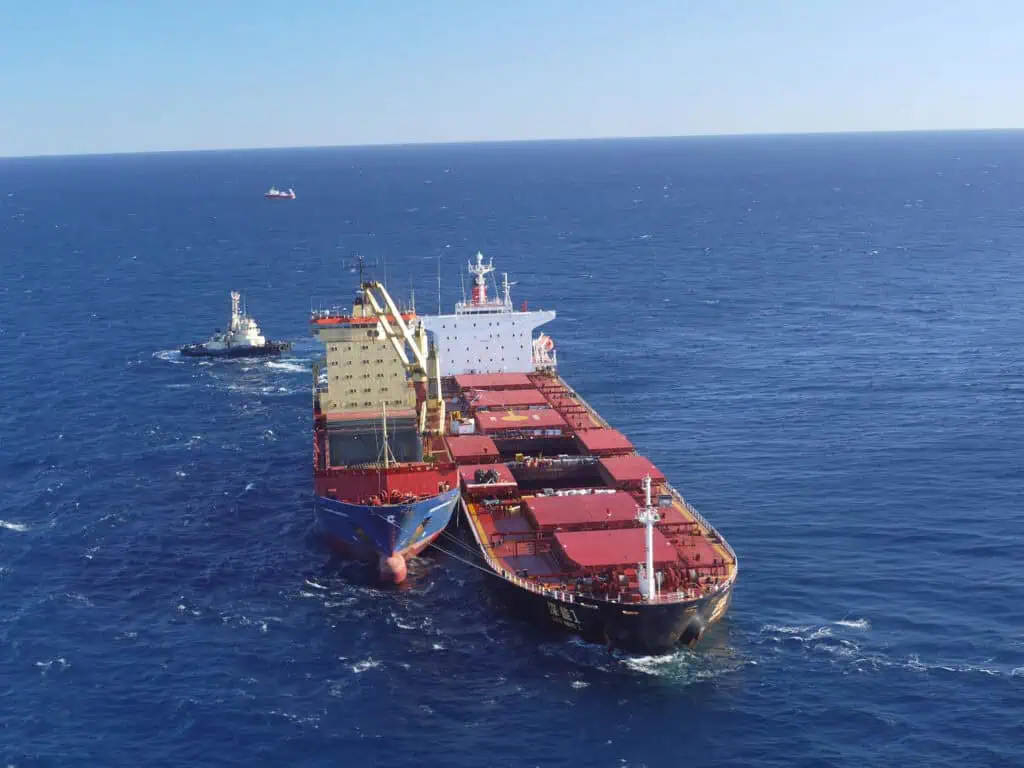
At daylight on 4 April 2010, oil was seen leaking from the ship into the ocean, and an extensive amount of coral was seen to be damaged or destroyed. Further, although grounded, the vessel was grinding/destroying more reef coral. Emergency operations in the first few days included dropping chemicals from planes into the water to disperse the oil and using tugboats to limit the grinding movement of the Shen Neng 1.
THE CREW AND THE VESSEL’S OWNERS
The 23-man crew of the Shen Neng 1 were all Chinese nationals, and their understanding of English was described to the AFP as ranging from limited to non-existent.
The vessel’s owner was the Shenzhen Energy Transport Company, a Chinese entity that authorised its Australian-based shipping agent and lawyers to deal directly with Australian authorities. The AFP was told the ship’s captain and crew would not participate in police interviews but would provide full assistance to salvage and maritime authorities.
IMMEDIATE PRIORITIES
Speed is usually a vital part of a police response to the scene of a serious collision. There were several reasons why it wasn’t required in this instance.
The primary focus of other agencies and the crew was preventing the Shen Neng 1 from breaking up, sinking and further damaging the reef. Even though the crew were foreign nationals with no ties to Australia, there was little risk of them fleeing from the scene. The ship was severely damaged and unable to sail under its own steam, and AMSA declared the area around the site an exclusion zone. This prevented the unauthorised arrival or departure of personnel, aircraft or other vessels to the Shen Neng 1.4
Provided the ship remained intact, critical evidence was unlikely to be destroyed. Logbooks, onboard computerised data, and other records were required to be maintained for legislative and insurance purposes. The vessel’s owner was a major company that wanted to maintain its reputation and was acutely aware it had legal obligations to preserve evidence.
These factors combined to give Federal Agents Holder and Payne a couple of days to gather information and evidence from shore-based witnesses and research legislation, procedures, and investigative options relating to maritime offences.
Two GBRMP Act offences presented themselves as the most appropriate to pursue. The first (s.38DA) is an offence for any person in charge of a vessel in the marine park if the person’s charge of the vessel results in, or is likely to result in, the vessel causing damage to the park environment. The maximum penalty at the time was three years’ imprisonment and/or a $220,000 fine.
Section 38FC establishes an offence for any person who is the owner or the master of a vessel used in committing an offence against section 38DA, with a maximum penalty of $55,000.
Both sections establish strict liability for offenders. A quirk of the legislation quickly came to police attention.
Because the captain/master of the Shen Neng 1 was a foreign national, police had to obtain the written consent of the Commonwealth Attorney-General before commencing legal proceedings. This imposed an additional and time-critical layer of reporting.
Other tasks for AFP agents in these first few days included organising the logistics surrounding travelling to the vessel, securing additional forensic and investigative support, and dealing with the impact of arising political developments.
THE MEDIA AND POLITICAL ‘LENS’
Media reportage about the collision began on Sunday 4 April 2010 (the day before the AFP was notified) and intensified considerably during subsequent days. Images of the ship, the oil spill and the damaged reef were televised globally. Comments attributed to the ship’s captain minimising the scope of the oil spill caused controversy – especially reports suggesting he was more concerned about Australian rescue workers availing themselves of the ship’s water in order to remain hydrated.
Senior politicians expressed anger about the grounding. Prime Minister Kevin Rudd stated it was “outrageous that any vessel could find itself 12kms off course”.5 Queensland Premier Anna Bligh demanded the Commonwealth “throw the book” at those responsible for the grounding.6 The federal opposition called for the Prime Minister to personally take charge of managing the oil spill and to use military assets to do so.7
The Prime Minister flew over the reef to view the vessel and damage on the day the AFP arrived in Gladstone. Other politicians to fly over the scene that week included the Federal Environment Minister, the Queensland Premier and the leader of the Greens Party. Each politician issued stern public statements about the grounding. This attracted criticism from the opposition, with Senator Barnaby Joyce calling the scene a tourist attraction for Labor politicians.8 All of this made great fodder for the media.
This intense political interest made itself felt at the operational level. The insatiable thirst for information from the various ministers and department heads encouraged interagency competition, especially between those agencies that already had somewhat tense relationships. This was counterproductive to the operational effort.
This was largely addressed after the mid-week arrival in Gladstone of Federal Agent Peter Bodel, appointed by AFP management to lead what was now titled Operation Paramount – an AFP-led, multi-agency criminal investigation.
Working with his counterparts from the various agencies at Gladstone, Bodel implemented a centralised information-sharing process that ensured consistent briefings were regularly provided to Commonwealth and State ministers and departmental heads. This significantly reduced tensions and allowed each agency to focus on its core tasks.
THE FIRST VISIT TO THE VESSEL
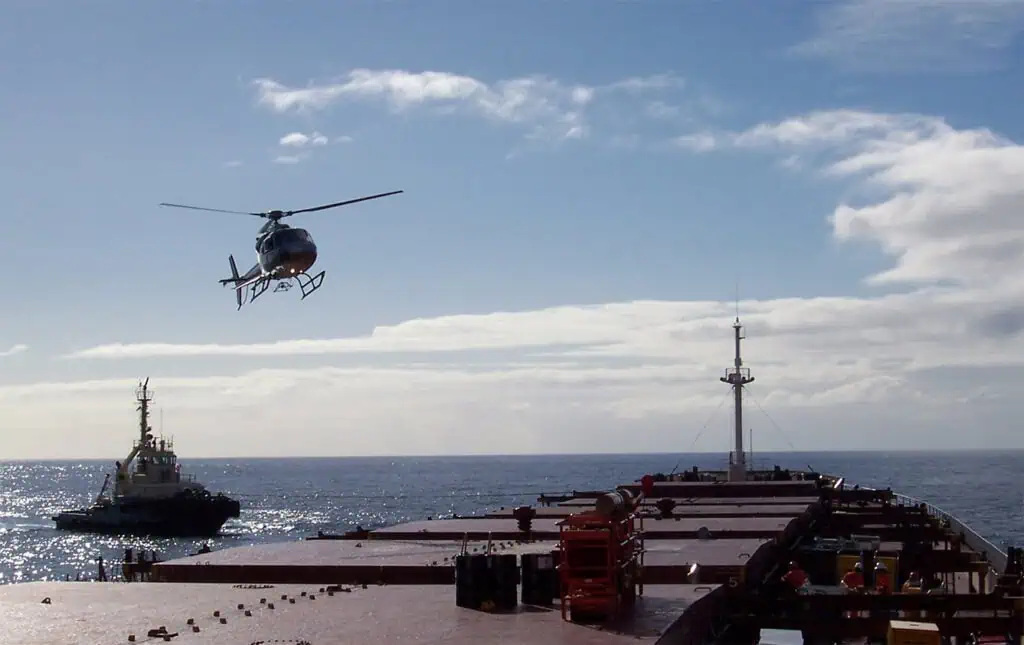
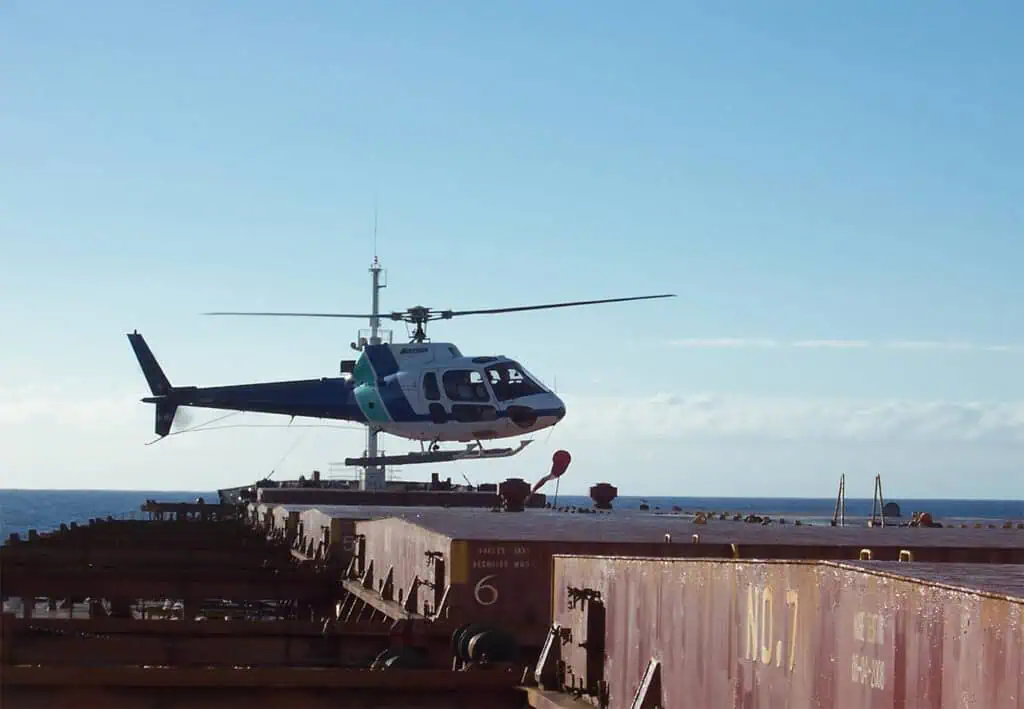
On Thursday 8 April Federal Agent Payne, acting as an inspector under the GBRMP Act, flew in a chartered helicopter to the Shen Neng 1. He travelled with an investigator from GBRMPA, an AMSA investigator and a Chinese language interpreter. After landing on the ship, the AMSA investigator formally served a notice of detention for the ship, pursuant to the POTS Act.
Once served, the ship became the property of the Commonwealth until the pollution incident was resolved. The notice was served on an Australian lawyer representing the ship’s owner, who was present on the vessel.
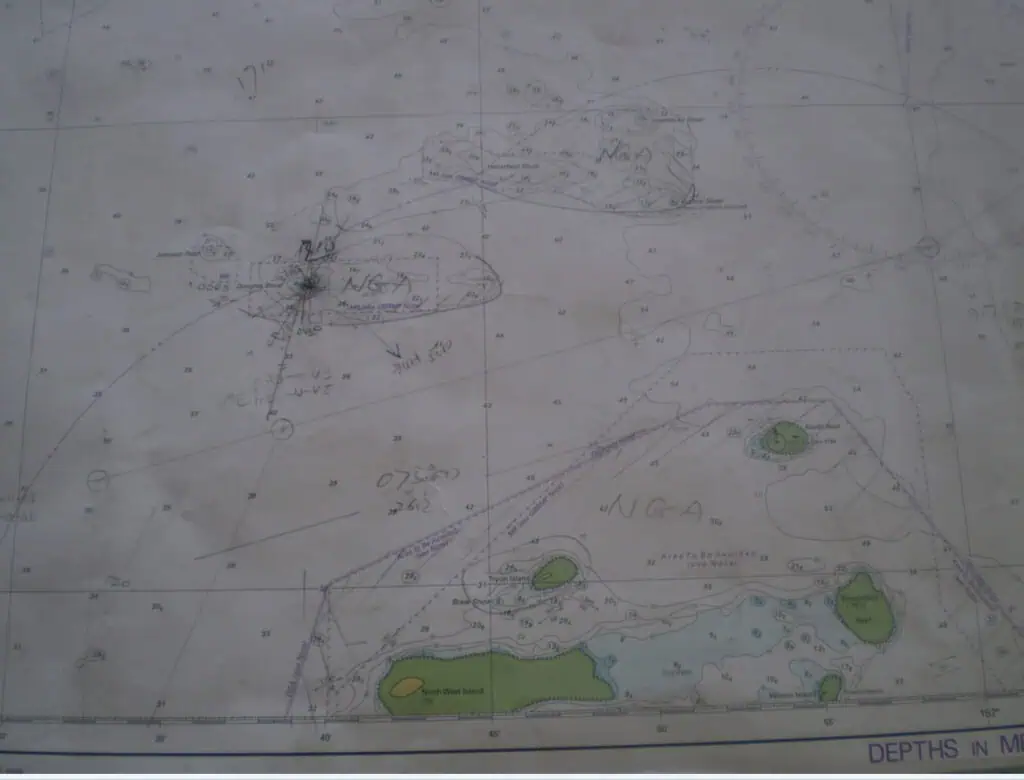
The visit also allowed the inspectors to supervise the collection of oil and water samples from the vessel and the ocean and seize copies of key documents and data, including the certificate confirming the vessel’s nationality, the passage plan signed by key officers, copies of GPS waypoint coordinates, the watch schedule, and physical charts of the reef.
Payne briefly met the ship’s captain and chief officer to confirm their identities by inspecting their passports. After a couple of hours on the ship, the party returned to Gladstone. The samples were sent for analysis, and translators were set to work on converting the Chinese entries into English.
TAKING STOCK
By the weekend of Saturday 10 and Sunday 11 April, Federal Agents Bodel and Payne were satisfied sufficient evidence existed to arrest and charge the ship’s captain and chief officer. Statements taken from people such as the pilot, the manager of Gladstone Port, a communications technician and an AMSA surveyor indicated the Shen Neng 1 (including its GPS) was functioning correctly, and its crew demonstrated the expected levels of competence on the day of the grounding.
The ship’s records confirmed the chief officer was in charge when it ran aground. Advice from CDPP and AFP lawyers indicated the ship’s captain was liable for the crash, even though he wasn’t physically at the helm of the vessel at the time of the collision.
Preliminary advice from GBRMPA indicated extensive damage to the reef, much of it caused by the ship’s grounding and grinding movement.
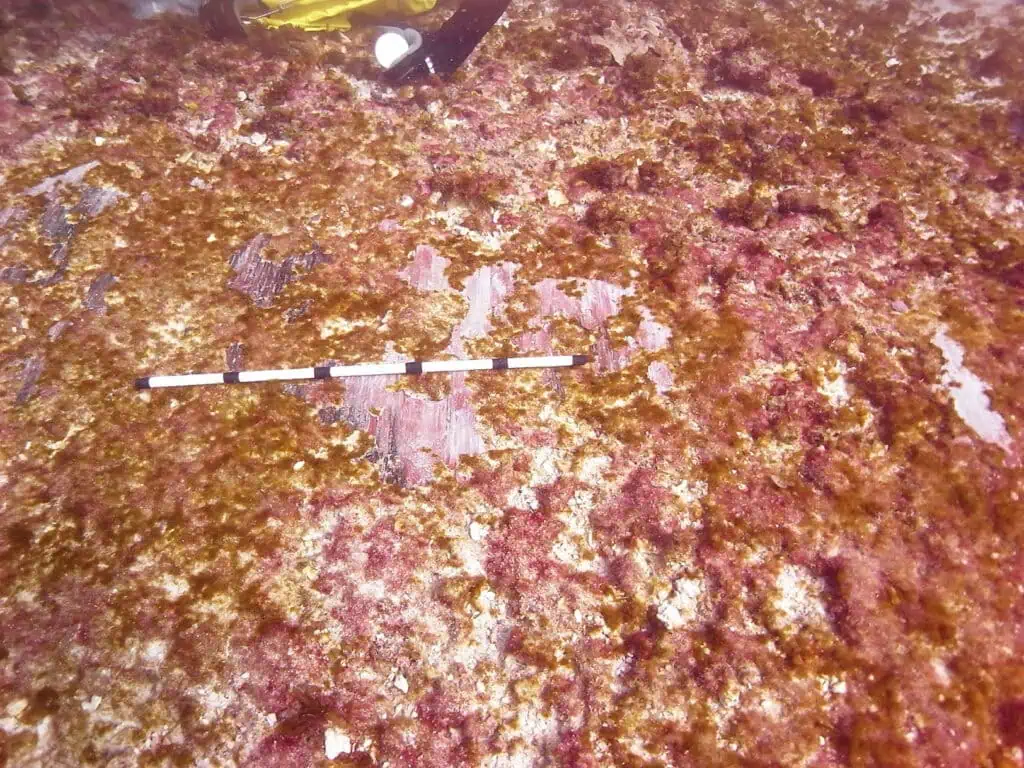
The spillage of oil and the scraping of antifouling paint off the hull created more damage. The paint contained toxic chemicals banned in Australia, and even the smallest traces were fatal for the delicate coral.
On the face of it, all that was required was to return to the vessel, arrest the captain and chief officer, and execute a search warrant to formally seize the logbook, GPS data, charts, and other records. Arrests would be justified to guarantee the sailors’ appearance before the courts.
However, this was not a straightforward matter. There were several complexities.
The first was that the captain and chief officer could not be arrested until replacements were onboard. By maritime convention, a commercial ship at sea can’t be left without a captain and chief officer. Sensing what would come, the ship’s owners sent two appropriately qualified sailors to Australia. They flew to the vessel on Saturday 10 April but it would take them a few days to acclimatise and be brought up to speed.
Ensuring the lawful entry of the ship’s captain and chief officer into Australia after arrest was also an issue requiring pre-planning.9 DIAC was contacted and briefed on the situation. They implemented the necessary arrangements to ensure relevant visas would be promptly issued when the men were brought ashore.
The planned relocation of the Shen Neng 1 also influenced the timing of the arrests. The ship was still grounded but authorities planned to refloat it on 12 April and tow it to a safe location.
Protracted discussions were held between police and maritime agencies to sequence the arrests at the least disruptive time for salvage operations. It was agreed that Wednesday 14 April would be appropriate as the ship would be anchored in calm waters to the north of Great Keppel Island by then. Legal advice also indicated that the search warrant needed to be served on the senior salvage operator as, technically, he would be in command of the ship on the day. Copies of the warrant would also be given to the captain and his lawyer.
The seizure of the physical logbook presented a challenge due to the international legal requirement for logbooks to be present on commercial vessels. AMSA agreed to organise a replacement book to be taken to the ship, which could be used until the original was copied and returned.
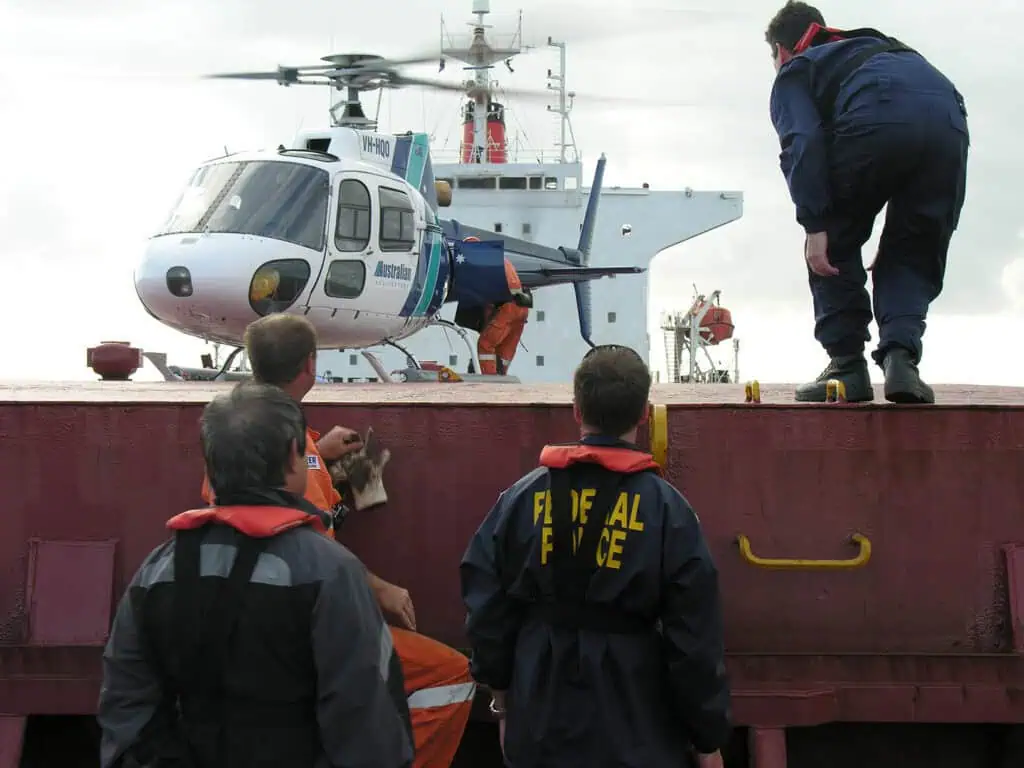
Travel to the vessel was facilitated by GBRMPA, which chartered a helicopter. The only aircraft available was a small Aerospatiale Squirrel, meaning multiple flights would be required on the day to move all personnel, with a travel time of 30 minutes each way. Police accoutrements (handcuffs, pistols, etc.) had to be placed in storage during the flights.10
The final challenge for the police was preparing a plethora of documents in time for the arrests. These included risk assessments, staffing assignment sheets, bench charge sheets, the standard tactical plan, objection to bail documents and statements of fact for the courts. The search warrant affidavit and warrant pursuant to section 3E of the Crimes Act 1914 had to be prepared and sworn before a local magistrate. The team also had to draft and submit a report to the Attorney-General to obtain permission to arrest and charge the captain. This was a considerable task for the small team with limited access to AFP computer systems, although colleagues in Brisbane and Canberra11 supported them.
The day before the arrests and execution of the search warrant, five additional AFP personnel arrived in Gladstone, including computer forensic team staff, additional investigators and a coordinator. At 7.10pm that evening Attorney-General Robert McClelland formally advised the AFP by email of his consent to commence proceedings.
THE ARRESTS
On the morning of Wednesday 14 April four federal agents, an AFP computer forensics technician, an interpreter, a GBRMPA inspector and an AMSA inspector gathered at Gladstone Airport. After safety and operational briefings, including weighing each person, they flew to the Shen Neng 1 in two flights. The first arrived at 10am, and the second at 11.30am. Two federal agents remained in Gladstone to undertake coordination and forward command post duties.
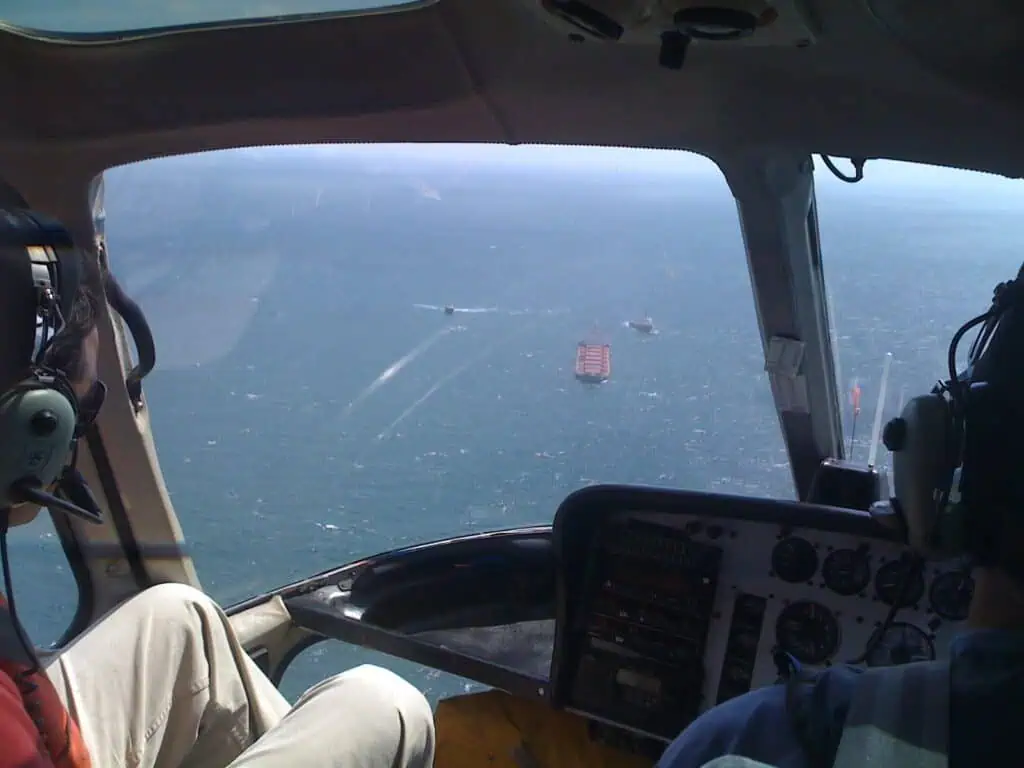
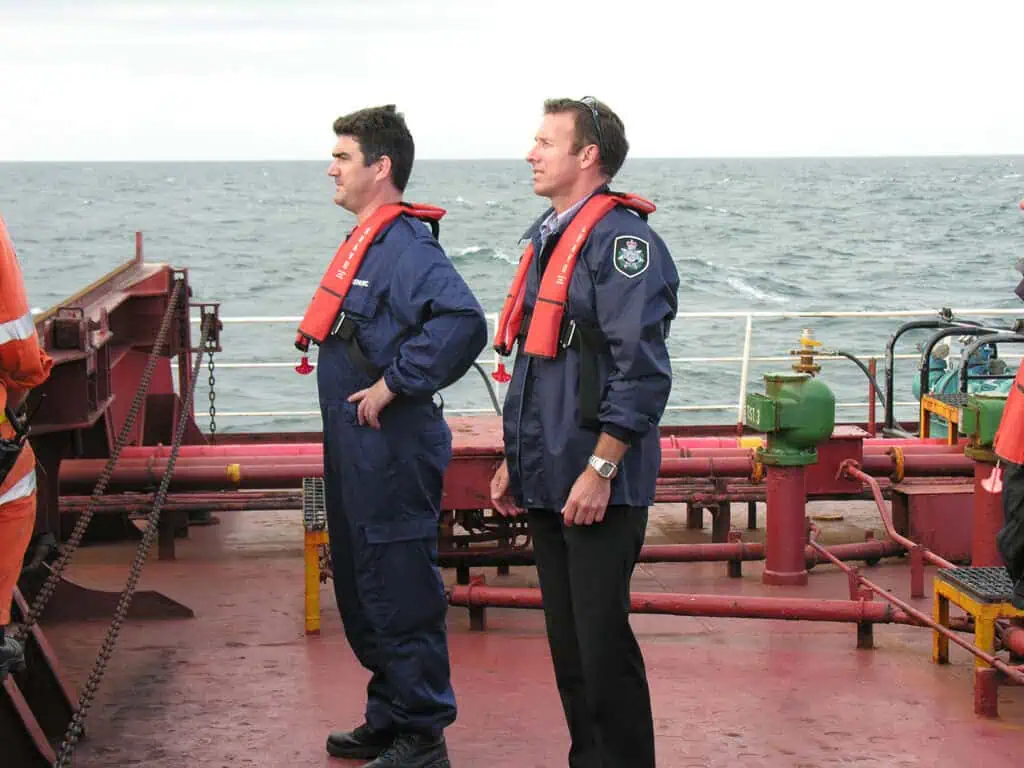
The arrival of police was not a surprise to those on the ship. A warning was provided, and a legal representative was onboard. Upon arrival Bodel served the search warrant on the senior salvage operator. About 10.20am, Bodel spoke to Captain Wang in the latter’s cabin, where he explained (with the assistance of the interpreter) the purpose of police attendance, the captain’s legal rights and how the search warrant would be executed. At about 10.55am, Payne had a similar conversation with the ship’s chief officer.
When the second flight arrived on the Shen Neng 1, police commenced their search of the bridge and relevant cabins. Items seized included voyage planning documentation, marine charts, the crew list, the watch schedule, the passage plan, the stowage plan, the GPS logs, the deck logbook, a range of relevant certificates, and an electronic copy of the ship’s master computer. The captain’s personal diary was also seized, but the man’s lawyer immediately claimed legal privilege.12
About 1.50pm, Bodel formally arrested Captain Wang. After signing over the warrant to Payne, Bodel, Federal Agent Nik Papagiannis, the captain, and the interpreter flew to Gladstone. Payne subsequently arrested Chief Officer Wang, and the search was concluded.
After administrative matters were attended to with the men’s lawyer on the vessel, Payne, his colleagues, and the arrested sailor flew to Gladstone.
Both sailors were polite towards police but declined the opportunity to participate in a taped record of interview. They were charged and lodged at the Gladstone Watch House.
INTERNATIONAL DIPLOMACY
During this period, Chinese diplomats demanded that AFP and DFAT officials in Canberra and Gladstone allow the diplomats to speak with the two men. The men indicated they did not want to speak. The diplomats received these responses poorly. Bodel formed an impression that the diplomats could not entirely accept that the police couldn’t make the sailors talk to them.
BAIL AND REPAIRS
On Thursday 15 April the two sailors appeared at the Gladstone Magistrates’ Court. The captain was bailed on his own undertaking to appear in court when required. In granting bail, the magistrate took into account the man’s age and the potential detrimental effect on his family, given that he is the sole financial provider.
Faced with a more serious charge, the chief officer was bailed on the condition that he surrender his passport and return to Shen Neng 1. He was not to leave the vessel without the prior approval of CDPP.
In May, when the vessel was being prepared to leave Australian waters, and after negotiations between lawyers, the man’s bail conditions were altered. He was allowed to leave the country only after depositing a $100,000 cash surety with the court. The company loaned the cash to the chief officer and promised the court both men would return when required.
Meanwhile, salvage and repair work continued on the Shen Neng 1. Initial plans to tow the vessel to Gladstone to offload the coal were abandoned because of its poor handling qualities and unfavourable weather conditions. Instead, it was towed to a protected anchorage near Hervey Bay, where the coal was offloaded into smaller ships without mishap. Now significantly lighter, on 31 May 2010 the Shen Neng 1 was towed from Australian waters by a deep-sea tugboat.
BRIEF PREPARATION
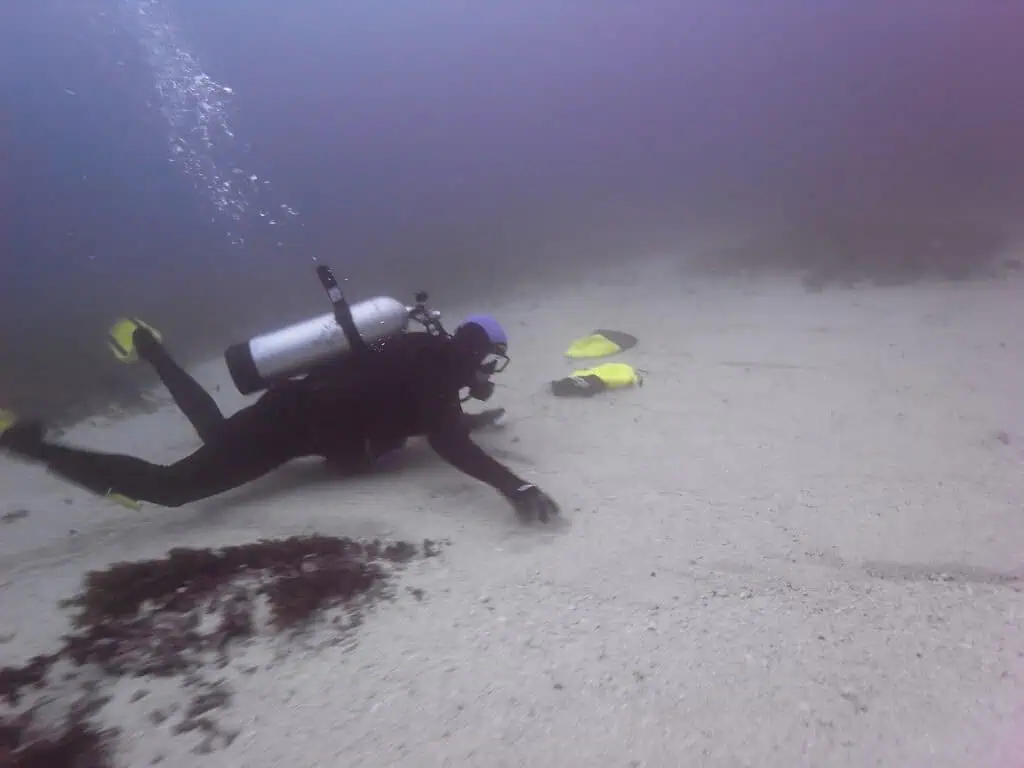
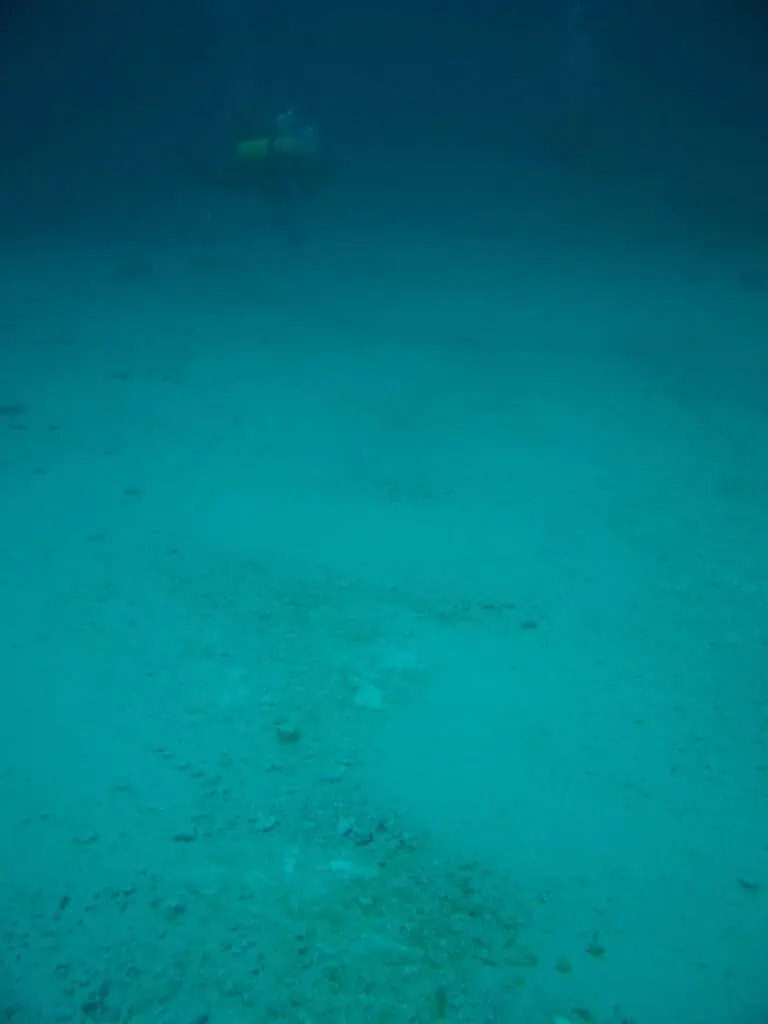
It took almost 18 months to compile a complete brief of evidence. The delay was primarily due to the need to carefully assess the full scope of damage caused to the reef. GBRMPA-appointed scientists and consultants undertook the assessments. GBRMPA’s final impact assessment report outlined that 115,000m2. of the shoal was severely damaged or completely destroyed, with patchy or moderate damage occasioned to a further 285,000m2. of reef.13 The destruction and death of the coral and associated marine organisms was substantial, with considerable and long-lasting effects predicted for the biodiversity and ecosystem health of the area.
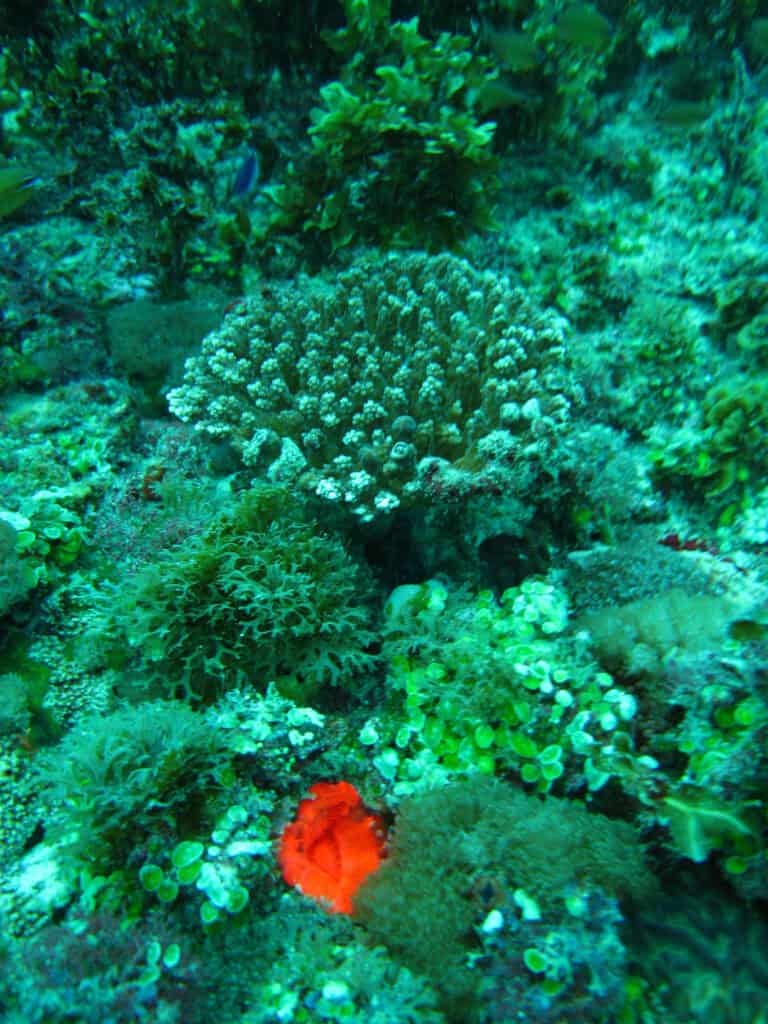
More than 50 witnesses were interviewed by police and/or provided technical reports for the brief of evidence. This included experts who analysed the information and data seized from the Shen Neng 1, technicians who could confirm the path of the vessel, those who could attest to the shoal being physically inside the Great Barrier Reef Marine Park, people who took oil and paint samples from the ship and surrounding ocean, scientists who examined the reef and those involved in the execution of the search warrant. Even Bureau of Meteorology weather reports for 3 April 2010 formed part of the crown’s case.
Somewhat unusually for a brief of evidence, many document exhibits were copies. The seized originals had been returned to the ship’s owners because the company needed them to continue operating. In return, the company agreed it would not challenge the presentation of the copied documents at the hearing or trial. By and large, there were substantial levels of cooperation and understanding between defence lawyers, prosecutors and police regarding procedural aspects of the case. While representing the interests of their clients, defence counsel did not act in a way that police believed to be obstructionist.
During the brief preparation period, GBRMPA, CDPP, and the AFP discussed whether criminal charges would be laid against the owners of the Shen Neng 1. As GBRMPA wanted to pursue civil proceedings to secure compensation to clean and repair the reef,14 the AFP saw no point in laying criminal charges.
CONTESTED JURISDICTION
In early 2012 the defence indicated they wished to contest the jurisdiction being applied against Chief Officer Wang. They asked Gladstone Magistrate Warfield to consider if the wording of the GBRMP Act was such that their client (as a foreign national) could not be found guilty of an aggravated (indictable) offence. If so, the matter should be dealt with summarily in the Magistrate’s court, and the maximum penalty would be a fine. The prosecution disagreed.
On Thursday 7 June 2012 the prosecution and defence presented their arguments to the Magistrate. Issues canvassed included Australia’s obligations under the United Nations Convention on the Law of the Sea 1982, which generally restricts countries from imposing prison sentences on foreign nationals in relation to pollution offences, except in cases of wilful and serious acts of pollution. There was also disagreement on the use and interpretation of words such as “the” and “pollution” in the GBRMP Act.
At its core, the defence argued the somewhat imprecisely worded legislation meant the Magistrate should first determine whether the charge was summary in nature. The prosecution argued the charge was indictable and should be heard at the District Court. Questions about circumstances of aggravation and how this might impact penalty options should only be decided after the court determines whether the chief officer was guilty.
Magistrate Warfield took a month to consider the submissions. He handed down an extensive written judgment dated 6 July 2012. He agreed with the prosecution’s case and set the committal date for October 2012. The captain’s matter (a summary offence) was to be heard in November 2012.
GUILTY PLEAS
In both cases, defence counsel advised prosecutors at the last minute that guilty pleas would be entered.
On 17 October 2012 Chief Officer Xuegang Wang entered a guilty plea at Gladstone Magistrates Court to the aggravated offence of navigating a vessel that caused damage to the Great Barrier Reef Marine Park. The matter was referred to the Brisbane District Court for sentencing, which it did on 26 October 2012. Wang was sentenced to 18 months' imprisonment with a non-parole period of three months and then a two-year good behaviour bond.
When sentencing Wang, Judge Leanne Clare said the man’s failure to monitor the ship’s course amounted to “gross negligence” and he “appears to be a good man who had a very bad day.”15
Prosecutors and police expected Wang to lodge an appeal, but one didn’t eventuate.
The following month, on 14 November 2012, Captain Jichang Wang entered a guilty plea to the charge of being the master of a vessel that committed an offence in the marine park. He was fined $25,000. The Magistrate took into account the man had been suspended from duty for two years and seven months and had been paid only $1000 per month during that time. He was given an unlimited time to pay, although the company stated it would ensure the fine was paid.
WHAT ACTUALLY HAPPENED?
Concurrent with the AFP’s Operation Paramount, the ATSB conducted an independent safety investigation into the grounding. The purpose of an ATSB safety investigation is to identify and reduce safety-related risks; it does not apportion blame, and its report findings can’t be used in criminal prosecutions.
Notwithstanding the above, it is possible to draw on the ATSB report and the evidence collected by the AFP to determine what occurred before the grounding.
When loading coal and fuel onto the Shen Neng 1 in Gladstone, the vessel’s crew worked for almost 24 hours straight. Chief Officer Xuegang Wang was responsible for multiple tasks during this period, including directly supervising the loading of the coal – a process that took considerably longer than initially envisaged. He slept for only 2.5 hours in the 38.5 hours leading up to the grounding.
This included a 30-minute nap immediately prior to starting his rostered shift as officer of the watch at 4pm on Saturday 3 April.
Upon assuming command, Wang was briefed by the outgoing officer of the watch about the slightly changed course and was told the new waypoints had not been entered into the GPS computer. The outgoing officer did not tell Wang exactly when the ship had to turn.
The sleep-deprived chief officer mentally calculated the ship would need to turn eastwards about 5pm. He did not check his calculations with the GPS computer or the officer he was relieving. This would prove a grave error as the ship reached the waypoint at 4.42pm.
Wang was one of only two crew members rostered to be on the bridge at the time. The other was the duty seaman, a junior sailor who stood at the front of the bridge to keep a lookout.
Shortly after 4.30pm Wang sat in a chair on the starboard side of the bridge where he could see out of the bridge’s window and keep an eye on the ship’s radar screen. It’s suspected that the seriously fatigued officer inadvertently dozed for around 20 minutes, with the ship rocking slightly in a moderate swell.
About 5pm Wang went to the chart table on the bridge to initiate the turn. After plotting the vessel’s GPS coordinates on a physical chart, Wang realised, to his horror, that the ship was entering a ‘no go’ area. He immediately ordered the lookout to steer the ship to starboard and rapidly reduce speed. The lookout did what he was told, but it was too late – the ship came to a shuddering halt as it grounded on Douglas Shoal at low tide. Within moments, colleagues, including Captain Wang, arrived on the bridge and initiated emergency response procedures.
CIVIL ACTION
In September 2016 GBRMPA announced an out-of-court settlement had been reached with the owners and insurers of the Shen Neng 1, who agreed to pay $39.3 million for remediation and rehabilitation work. The project included addressing the three types of damage caused by the ship: toxic antifouling paint particles, unconsolidated rubble, and crushed habitat.
The damaged parts of the shoal were dredged using advanced equipment, and the collected materials were placed in special ponds on land for treatment. In October 2023 GRBMPA announced that the offshore cleanup activities had been successfully completed.
REFLECTIONS
David Payne was the case officer for the investigation:
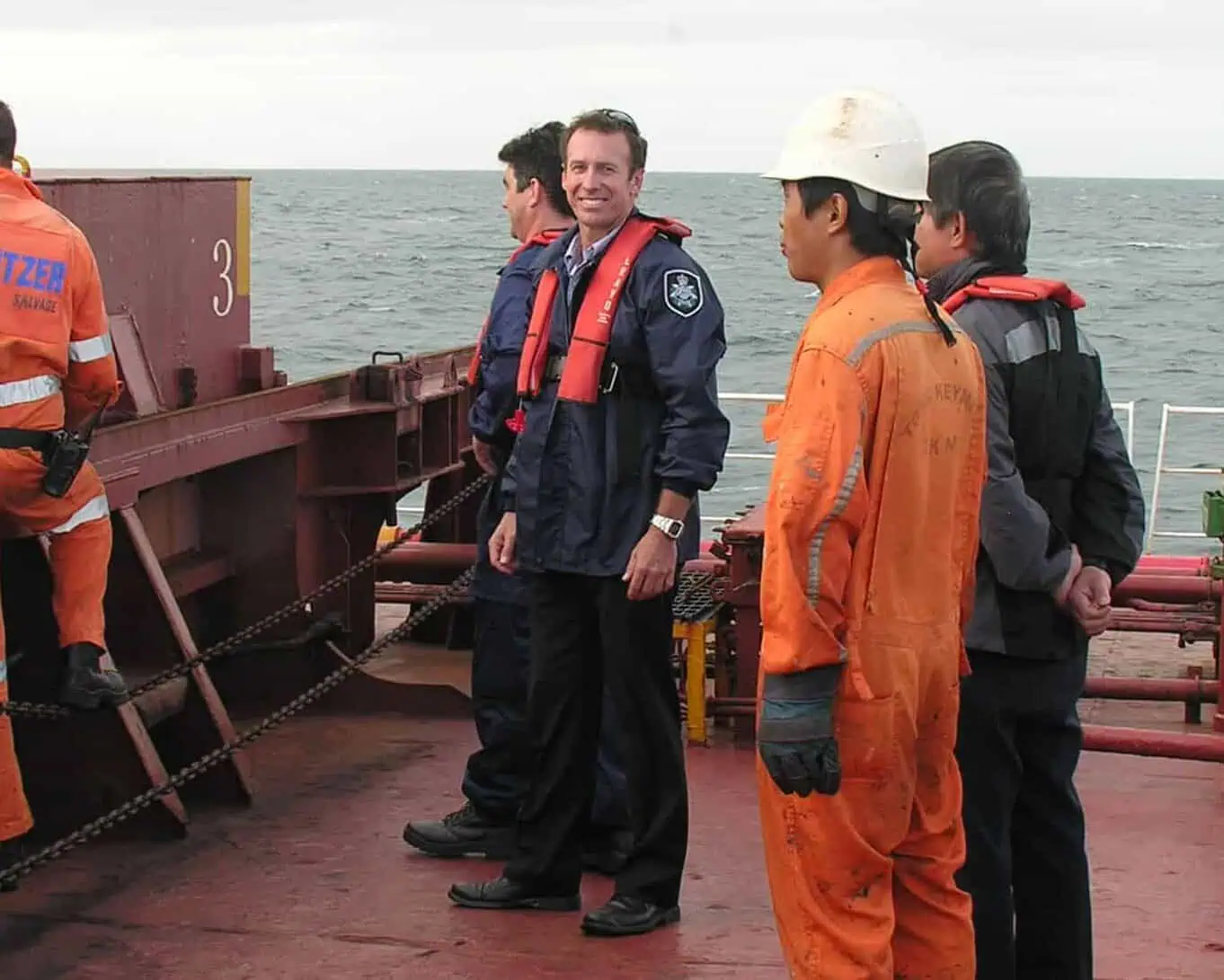
“It was an eye-opening experience dealing with so many state and federal agencies, as well as lawyers, insurers, diplomats and court officials. Fortunately, the media took little direct interest in the AFP investigators in Gladstone, although the intensity of the media coverage in the early days was clearly an issue for other agencies and our senior officers. After the arrests were made, the media seemed to lose interest, except for when the offenders were sentenced.
“One of the challenges we faced in Gladstone was working in an improvised office, which was my hotel room. We squeezed our equipment into the room. It was cramped, but it was adequate for the task.
“The most challenging part of the investigation was gaining an understanding of the intricacies of maritime law and how commercial vessels are expected to operate. Without the close support of CDPP and AFP lawyers who understood maritime law and without the technical advice from a wide range of maritime agencies, it would have been easy to inadvertently compromise the brief. So many procedural things police take for granted when operating on land, such as the carriage of accoutrements and who to serve legal documents on when executing search warrants, are contestable on water.
“I found the June 2012 legal arguments in court about interpreting the GBRMP Act to be fascinating. I could understand why the defence attempted to downgrade the charge against the chief officer, but their argument didn’t really make sense. To be fair to them, the legislation was not as succinctly worded as it could’ve been and we all were wondering if we were going to be involved in the making of good or bad case law. The Magistrate carefully sifted through the submissions and his decision supporting the prosecution was a relief. I was not surprised guilty pleas were subsequently made – it was a solid brief of evidence.”
Peter Bodel assumed the Team Leader role on 9 April 2010:
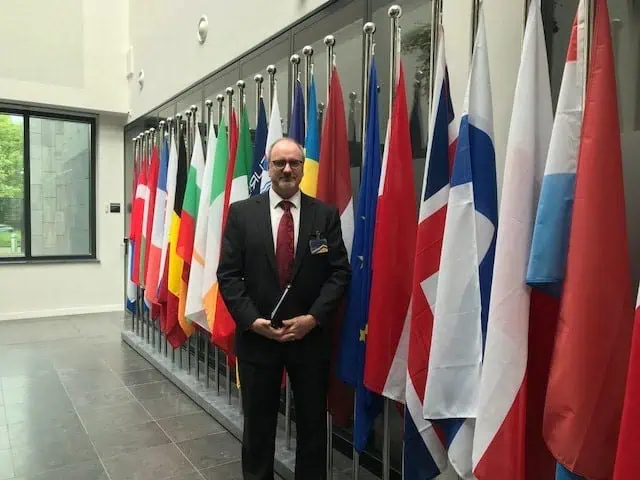
“I was away on leave with my family when I received the call to go to Gladstone. By then the AFP had decided to take the lead for the criminal investigation and there was a pressing need to address the interagency tensions which were being amplified by media and political interest. I was chosen due to the experience I held in managing interagency operations in similar situations.
“I organised an interagency roundtable discussion and that was tremendously beneficial in reaching agreements on how we all would ‘manage upwards’ and set realistic expectations for those wanting instant results. Because of the complexities of maritime law, if we had rushed into premature action, we would have fatally compromised the investigation. Implementing an organised and transparent interagency information sharing process enabled us to do our job in a low-key but effective fashion.
“Obtaining the search warrant authorisation from the local magistrate was unique. During our discussion he asked about the projected and actual course of the Shen Neng 1. I drew a very rough map on a scrap of paper, which answered his question. While he was stapling the map to the affidavit, I wondered what the courts would subsequently make of such an unscientific drawing. As things turned out, it didn’t become an issue.
“I’ll always remember flying out to the Shen Neng 1. On approach, the pilot wasn’t 100% sure the ship would take the helicopter’s weight so he decided to hover a few inches above the deck. We had to step off onto a gently rolling deck while caught in the helicopter’s downwash. It wasn’t the most graceful way to come aboard!
“There was a claustrophobic feel inside the ship, made worse by the strong smell of diesel, the stale recycled air, stifling heat and the presence of a large group of people in a confined area. I was glad to leave when the time came.
“The key lessons from this case for me were the importance of being flexible and responsive to evolving situations and knowing who to contact and call upon for advice and assistance. Working in a bubble is counterproductive. While my team had criminal investigations expertise, we knew little about maritime law, shipping and salvaging operations, environmental science and immigration processes. We were able to acquire that knowledge from state and federal agencies and the private sector.
“Important for me was the vital support of our families. With little notice we work very long hours and at times leave them and travel interstate or overseas at a drop of a hat for days and weeks at a time, meanwhile our partners and children are left to carry on without us. The support, sacrifices and love of family members is often undervalued and is a seldom-mentioned aspect to any police career. It was certainly a critical factor in enabling me to achieve what I did during my service.”
ABOUT THE AUTHOR
Jason Byrnes APM has been a member of the Australian Federal Police since 1991 and has been involved with the APJ since 2001. He has authored numerous articles and was recently appointed Deputy Editor. His latest book, In the Service of Peace, is a history of Australian police peacekeeping with the United Nations. It can be purchased through AFP Legacy or the Australian War Memorial bookshop websites.
FOOTNOTES
- This investigation occurred during the era when police in the AFP below the rank of Deputy Commissioner used the title 'Federal Agent'. ↩︎
- DIAC subsequently became the Department of Home Affairs. ↩︎
- In comparison, the distance between the try lines of a rugby league playing field is 100m, with the width of the filed 68m, and the height of the of a goal post is 5.5m. ↩︎
- The air exclusion zone was five nautical miles around the vessel. The sea exclusion zone was two nautical miles. ↩︎
- Chalmers, C.; Heger, U.; Caldwell, A. & Vogler, S. (2010), '‘Stricken Carrier Shen Neng 1 may have tried shortcut before Barrier Reef grounding’, The Courier Mail. 5 April edition. ↩︎
- The Sydney Morning Herald (2010). ‘Throw the book at them: Bligh’, 5 April edition. ↩︎
- Australian Associated Press (2010), ‘Stricken Chinese cargo carrier Shen Neng 1 grinds up Great Barrier Reef’,The Advertiser, 5 April edition. ↩︎
- ABC News (2010), ‘Photos reveal reef damage’, 14 April edition. Viewed 6 October 2024 at: https://www.abc.net.au/news/2010-04-14/photosreveal-reef-damage/395322. ↩︎
- The sailors had technically left Australia when they sailed out of port. ↩︎
- While it was felt unlikely that the ship’s crew would be violent or resist police, the possibility could not be ruled out, hence the need to take accoutrements. ↩︎
- This was in the early days of 3G Wi-Fi connectivity, meaning limited-to-no remote access to AFP systems in regional areas. Many of the ICT infrastructure challenges encountered in 2010 no longer exist. ↩︎
- The matter was ultimately not adjudicated in court due to the captain’s guilty plea. ↩︎
- 115,000m2. is approximately the area taken up by 17 rugby league playing fields. 285,000m2. is approximately 42 rugby league fields. ↩︎
- A criminal prosecution of the company would have likely resulted in less compensation being paid, in comparison to a civil case. It was deemed to be in the best interests of the reef to pursue the company through civil proceedings. ↩︎
- The Courier Mail (2012). ‘Shen Neng 1’s seaman jailed for reef damage’, 27 October edition. ↩︎

