
|
Getting your Trinity Audio player ready...
|
GROUND ZERO
Newman is in the heart of Western Australia’s Pilbara region, a vast red-dirt area known more for iron ore and heat than for internet access. The town is surrounded by desert plains and mining zones, where mobile phone coverage can disappear the moment you leave the bitumen. It’s the kind of place where isolation isn’t just part of the scenery; it’s part of the job.
Saturday 18 October 2025 began like any other shift at Newman Police Station. But now, as I think about it, did it really?
I’d just come back from a few days off when a bushfire emergency was unfolding across the Shire of East Pilbara, with 14 fire fronts stretching from Marble Bar to the Central Desert. Emergency advice broadcasts were in place, mine sites were shut down, and smoke plumes filled the horizon.
I was preparing for a busy day of arrest attempts on outstanding warrants and was halfway through putting on my body-worn armour when my supervisor said, “Wait, we might be going to a space debris job.”
The room fell silent, then erupted with laughter.
PLANE CRASH?
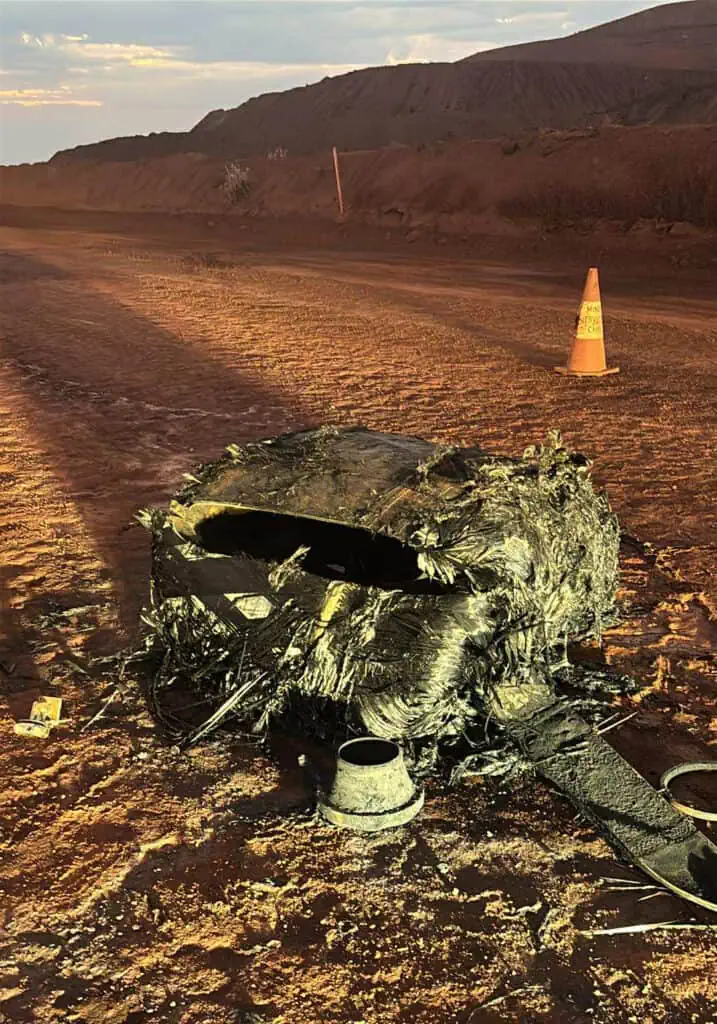
Initial reports indicated that an aeroplane wheel was found on a haul pack road at a closed mine. The wheel was on fire, raising concerns that an aircraft might be in trouble.
Images of the ‘wheel’ came through, and our first thought was “That’s not a bloody aeroplane wheel!”
Initial engagement with the Australian Transport Safety Bureau revealed that no aircraft had traversed the path over the mine site, and it was concluded that the object was not an identifiable aircraft part.
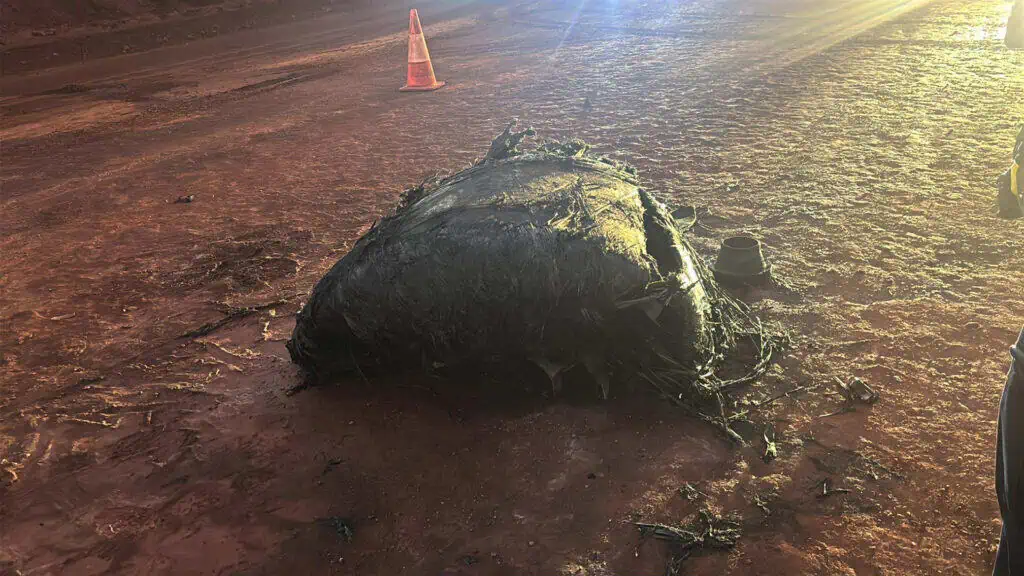
Multiple logical suggestions were considered about what it could be. These included a large truck wheel assembly and even a rolled-up conveyor belt, given that we were on a mine site that was in shutdown mode, but these suggestions proved incorrect. The mine’s emergency response team had extinguished the flames and even cut it open with a tin saw to cool the embers within.
Eventually, after exhausting all reasonable options, an image of the object was uploaded to an AI database, prompting a call to our star-gazing federal colleagues: The Australian Space Agency (ASA).
Although they couldn’t confirm it was space debris, they suspected it was.
SPRED
We all knew that the police are the main agency for Space Re-entry Debris incidents, commonly called SPRED, but none of us expected to attend an event from outer space.
As we drove out, I had more questions than answers. Mainly, what on earth (pun absolutely intended) were we supposed to do with space debris?
We’d been advised not to touch it and to assume it was hazardous.
Probationary Constable Connor McDonald and I arrived at the mine site and were greeted by staff who had located the crashed object. They were all excited. One even tried to hand us a piece of metal with foreign writing on it, hoping it might help identify the object.
Connor, a lifelong sci-fi fan, could barely stay still. He was eager to get a closer look as we tried to figure out what we were dealing with. The object was a crushed metallic cylinder, blackened by fire, with a strange pink-fibre surface that turned out to be carbon fibre.
I declined a closer look (after pulling Connor back), explaining the possible danger, and we were led to the main wreckage.
I took on the role of site commander, responsible for safety and coordination. It wasn’t a bad experience for a fourth-year constable.
A few hours in, I started thinking about the welfare of the other crews working nearby on bushfires. The mine site kindly supplied food and drinks, which lifted morale. I half-joked that I deserved a commendation for logistics alone.
ONE SMALL STEP
We called for specialist help, and soon extra emergency crews were on their way. We were warned about potential radiation, so we set up a 90-metre exclusion zone and tried to keep a light heart about the chance of developing superpowers.
One of us had to suit up to audio-visually record the radioactivity assessments conducted by the qualified mine site personnel, so Connor jumped at the chance before I could even understand the question.
As they approached the debris in protective gear, lightning flashed in the background. I took a photo and quipped to Connor, “One small step for man, one giant leap for DFES (Department of Fire and Emergency Services) volunteers.”
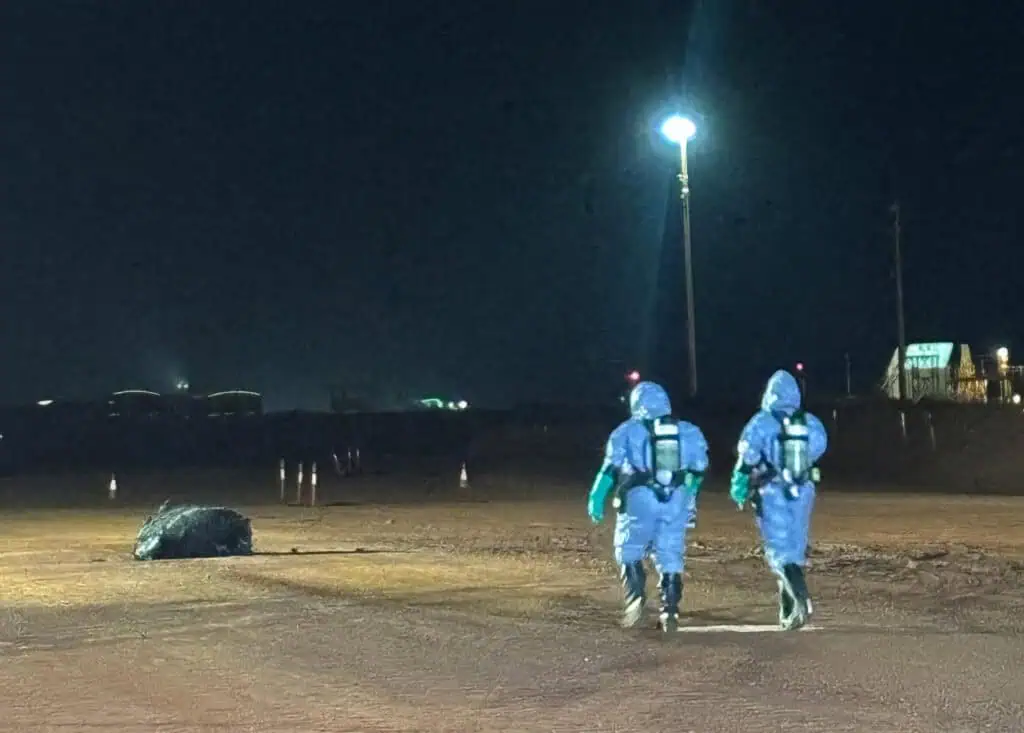
Thanks to Starlink, the satellite internet network that beams Wi-Fi from space, we managed to stay connected in the middle of the Pilbara and upload high-definition videos for real-time analysis by radiation experts. Moments later, we received the all-clear.
With radiation ruled out, the next step was straightforward: wait for further instructions. We still didn’t know what was inside the object or what chemical reactions the fire might have triggered.
The plan was to relocate the debris to a secure site at the mine for analysis by specialists with more expertise in space hardware.
Before we could take action, the wind shifted.
A nearby bushfire started pushing smoke and embers towards the mine’s ammonium nitrate storage area. Safety became the top priority. We stood everyone down and closed access roads until conditions improved and the debris could be moved to a safer part of the mine site.
What began as a routine shift turned into one of those unforgettable days in policing, where curiosity meets caution, and teamwork transforms the extraordinary into just another safe night’s work.
EDITORS NOTE
On 7 March 2026, ABC News reported that the Shire of East Pilbara had written to the ASA, hoping to have the space junk remain in the local area for public display and educational purposes. Inquiries are continuing with ASA.
ABOUT THE AUTHOR
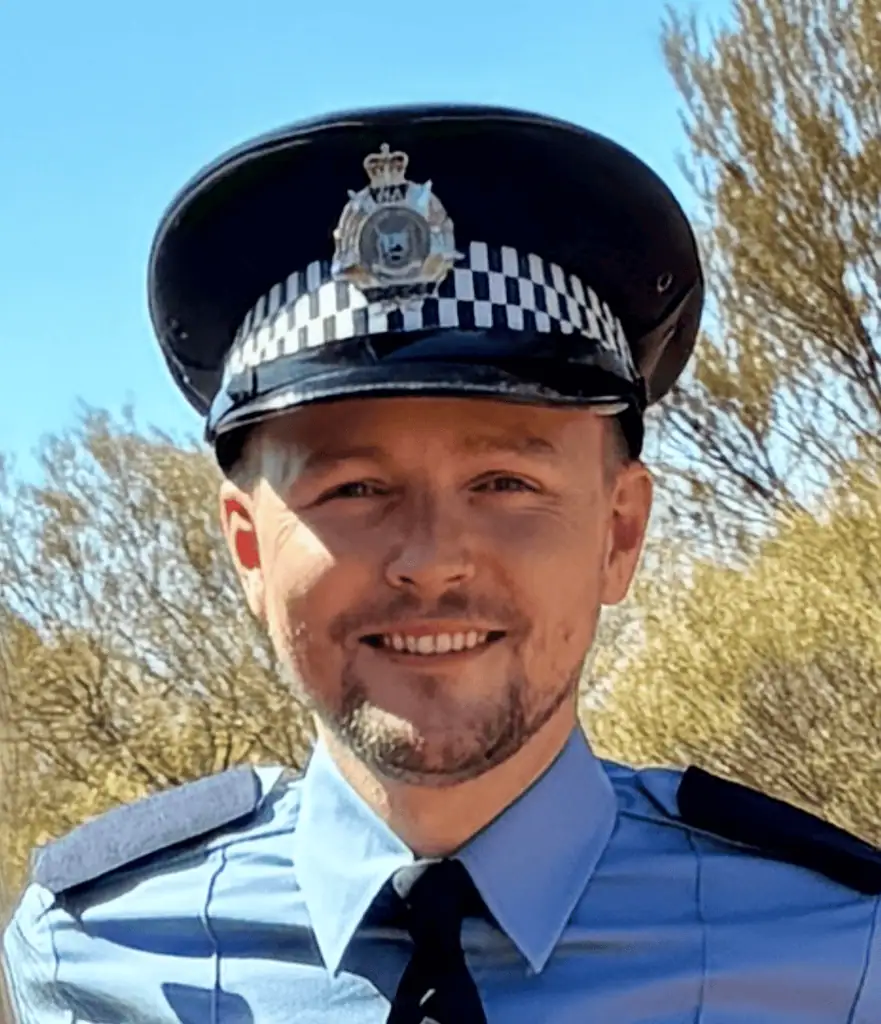
Constable Nick Morell is a fourth-year constable in the Western Australia Police Force, currently serving at Newman Police Station, 1200 kilometres north of Perth. He has previously undertaken remote country policing, having served at Laverton for two years.

